What is Geriatric Medicine?
Asheville Geriatrics · Dr. Hiren R. Patel
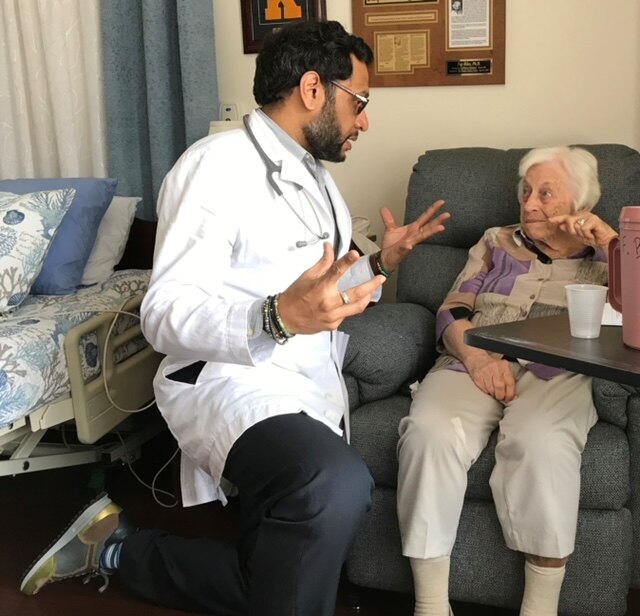
Geriatric care involves the treatment of medical issues prevalent in elderly people. While geriatric doctors also treat issues common to patients of any age, their specialties pertain to the medical and emotional care of senior citizens. No minimum age is required to see a geriatric care doctor. Some people maintain the incorrect perspective that geriatric care is only for patients enrolled in Medicare or those at retirement age or older. This is simply not the case. Younger patients in their forties and fifties experiencing diminished physical or mental functionality and/or age-related illnesses also commonly seek geriatric care.
Geriatric doctors, also referred to as geriatricians, are highly trained to view issues in their patients from a broad perspective. Many elderly patients experience multiple issues simultaneously, each of which potentially requires a different medication for treatment. Understanding possible adverse medication interactions is a primary specialization for geriatricians. The job requires safely prioritizing certain medication prescriptions over others, which are less important to the overall care and well-being of each patient.
Geriatric care also requires a great deal of sensitivity and compassion. This is true for medical professionals and loved ones at home alike. People in need of geriatric care are often approaching the late stages of life or suffering from serious ailments, which greatly reduce their quality of life. Most geriatric patients formerly lived full, happy, active lives. Some carry the emotional burden associated with longing for days gone by. Some are also not receiving the support they need from loved ones at home. Others live in isolation. Treating geriatric patients therefore also requires an assessment of their home life and living environment to make certain they are safe and secure every day.
What is the role of a Geriatrician?
Geriatricians provide specialized medical services in association with other care providers involved in the overall care plan designed for each patient. A geriatric doctor is privy to the overall care of a patient and therefore oversees all medications prescribed from multiple doctors. He or she then modifies medication routines according to what drugs are necessary and what drugs are at risk of causing an adverse interaction. When two or more medicines conflict with each other the priority prescriptions are kept and the others are removed from treatment plans.
Geriatric doctors also promote a healthy aging process by practicing preventative care and a focus on each patient’s overall wellness. Patients are educated about safe ways to stay active and healthy into the late stages of life. Negative concepts about aging are also countered through counseling and consultation.
Frequently asked questions
Why should I see a geriatrician?
Just as a pediatrician specializes in the care of children, a geriatrician specializes in the care of older adults. As we age, our bodies’ physiology changes. We react differently to medications, and often experience chronic illnesses or impairments that threaten our independence. A geriatrician is trained to recognize and treat conditions that are unique to older adults. Geriatricians also provide resources and educational materials that patients can use to maintain healthy lives.
How old should I be to see a geriatrician?
There is no specific age, but most patients who have a geriatrician as their primary care physician are 75 years of age or older. Often, patients who benefit the most from the services of a geriatrician have chronic illnesses, impaired physical function, impaired memory or cognitive function, depression or anxiety, weight loss, problems with balance or recurrent falls, and/or urinary incontinence.
What are the most common medical problems you see in older adults?
Dementia, delirium, falls, polypharmacy, coordination, confusion and agitation, coronary heart disease, anxiety, major depressive disorders, adjustment disorder, malnutrition, debility, carcinomas, and more.
When should you start seeing a geriatric doctor?
Patients should see a geriatrician if their medical condition causes considerable impairment and frailty; if their required list of prescription medications has grown, making it unclear which are appropriate; and/or if family members and friends feel considerable stress as caregivers.
If I see a geriatrician, can I still see my family doctor?
Yes. A geriatrician is a specialist and, after assessing you, will give you recommendations that you may take to your primary care physician or family doctor. The geriatrician can also become your primary care physician if that is your choice.
Get in touch
Call 828-707-2652 or send a note from the Mail app on this desktop.